Start with the way a scarf moves
Two scarves in the same color can give an outfit entirely different moods. One holds a crisp knot above a shirt collar; another falls in a long, glossy line; a third floats over the shoulders. That difference is drape: the way fabric hangs, folds and responds to movement. Paying attention to drape makes it easier to choose a scarf for the look you want, rather than choosing by print alone.
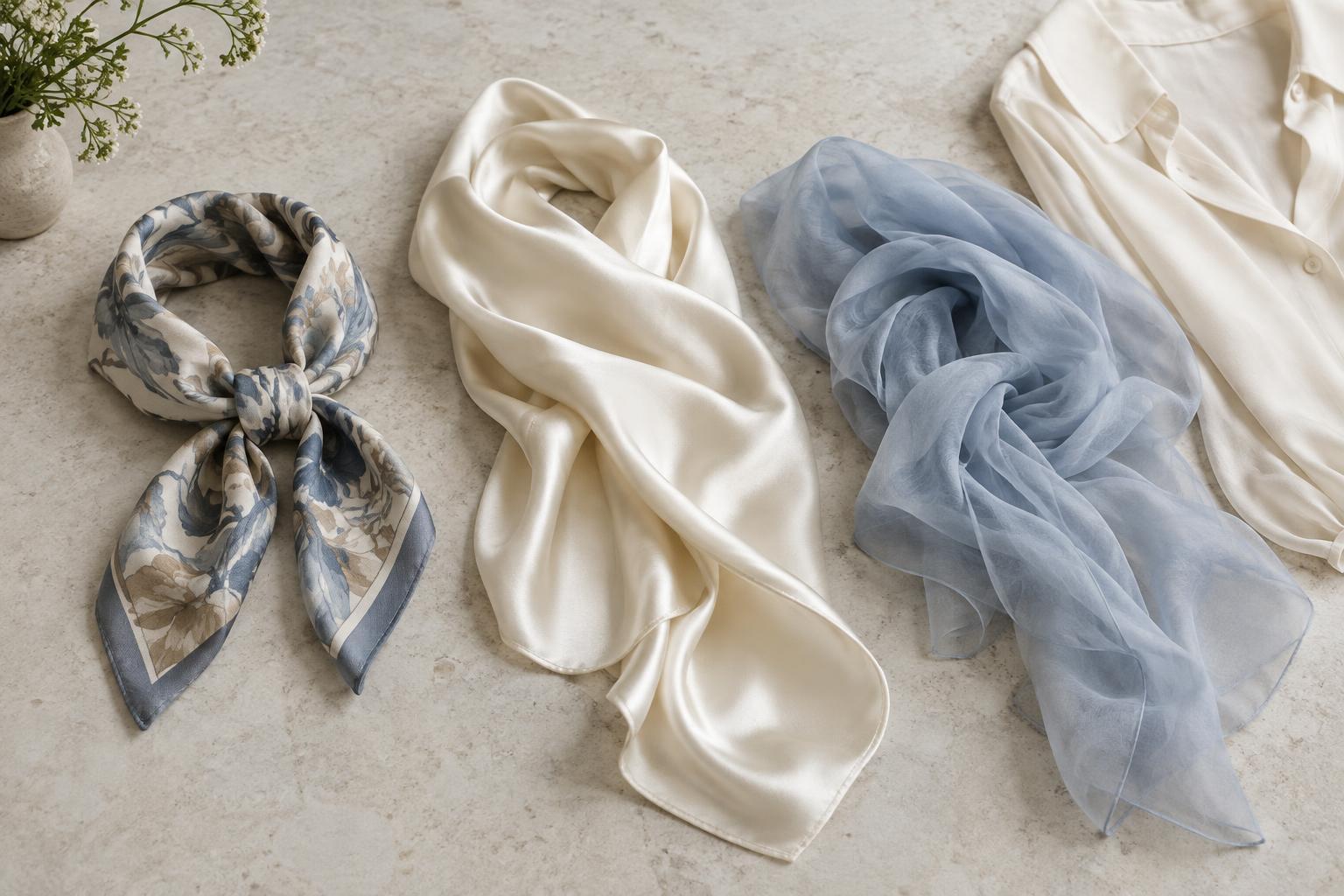
Fabric names do not tell the whole story. Twill and satin describe weaves, while chiffon describes a lightweight, sheer fabric that can be made from silk or other fibers. The scarf’s size, weight and finish also matter. Still, these three familiar options offer a useful starting point: twill tends to provide shape, satin tends to flow, and chiffon tends to feel airy.
Silk twill: defined folds and neat knots
Silk twill has a diagonal weave and commonly feels more structured than a very light silk scarf. Fold a square into a narrow band and it can keep a relatively tidy outline at the neck. Tie it once, and the ends are likely to look deliberate rather than wispy. That makes twill a good choice when you want a scarf to act as a small, clear accent.
Try a folded twill square with an open-collar shirt, a simple knit or a jacket with clean lapels. A short knot draws attention toward the face; a loose triangle shows more of the print and softens the front of a plain top. For a restrained outfit, let one color in the scarf echo a color already present in your clothing.
Twill is also useful when you want to see the design. Its firmer folds can frame sections of a print, although a tight roll will hide much of it. If the scarf feels bulky at the throat, loosen the knot or switch to a larger fold rather than pulling it tighter.
Satin: fluid lines and a polished surface
Satin is known for its smooth, lustrous surface. A satin scarf often falls in softer, longer folds than a similarly sized twill scarf, giving a simple outfit a more fluid finish. Its sheen catches light, so even a solid color can stand out against a matte cotton shirt or wool jacket. Satin may be made from silk or other fibers; check the label if the fiber matters to you.
Let satin hang rather than asking it to hold an intricate shape. Drape a long scarf around the neck with both ends loose, or tie a relaxed knot low on the chest. Against a high neckline, a narrow satin scarf can add a clean vertical line without covering much of the garment beneath it.
A very smooth scarf can shift as you move. If your knot slips, make it slightly fuller, tuck one end under a jacket lapel or choose a less slippery placement. Avoid fastening it with anything sharp that could snag the surface.
Chiffon: lightness and soft volume
Chiffon is sheer and lightweight, so it creates volume without much visual weight. A chiffon scarf can sit in soft clouds around the neck or move gently when worn over the shoulders. Where twill gives a knot definition and satin gives it shine, chiffon gives it a more diffuse outline. The effect depends on the scarf’s size: a small square may feel delicate, while a generous rectangle can provide noticeable coverage.
For daytime, try a loose chiffon loop over a plain top, leaving room for the fabric to gather naturally. For an occasion outfit, drape a larger scarf over the shoulders and let its translucence reveal the color beneath. A tonal pairing looks quiet and layered; a contrasting color makes the sheer fabric more visible.
Because chiffon is fine, heavy knots can overwhelm it. Keep ties loose, and be mindful of rough jewelry, bag hardware or fasteners that might catch the fabric.
Choose by outfit, then care for the fabric
When deciding between the three, consider what the outfit needs. If a plain neckline calls for a compact point of color, start with twill. If you want a smooth line alongside tailoring or a simple dress, try satin. If the outfit would benefit from softness and movement, reach for chiffon. These are possibilities, not rules: the best test is to drape the scarf against your clothes and see how it behaves.
Size can change your choice as much as fabric does. A large twill square may feel substantial, while a narrow satin scarf can be understated. Before wearing one out, try walking and sitting in it. Check whether the knot stays comfortable, whether the ends fall where you want them and whether the scarf competes with your collar.
For care, follow the scarf’s label rather than assuming every silk or chiffon piece needs the same treatment. Handle fine edges gently, avoid tugging at snags, and store scarves clean and dry without crushing delicate folds. A little attention to how a scarf hangs—and how it is handled—helps keep it an easy part of everyday dressing.