Start with the finish you want
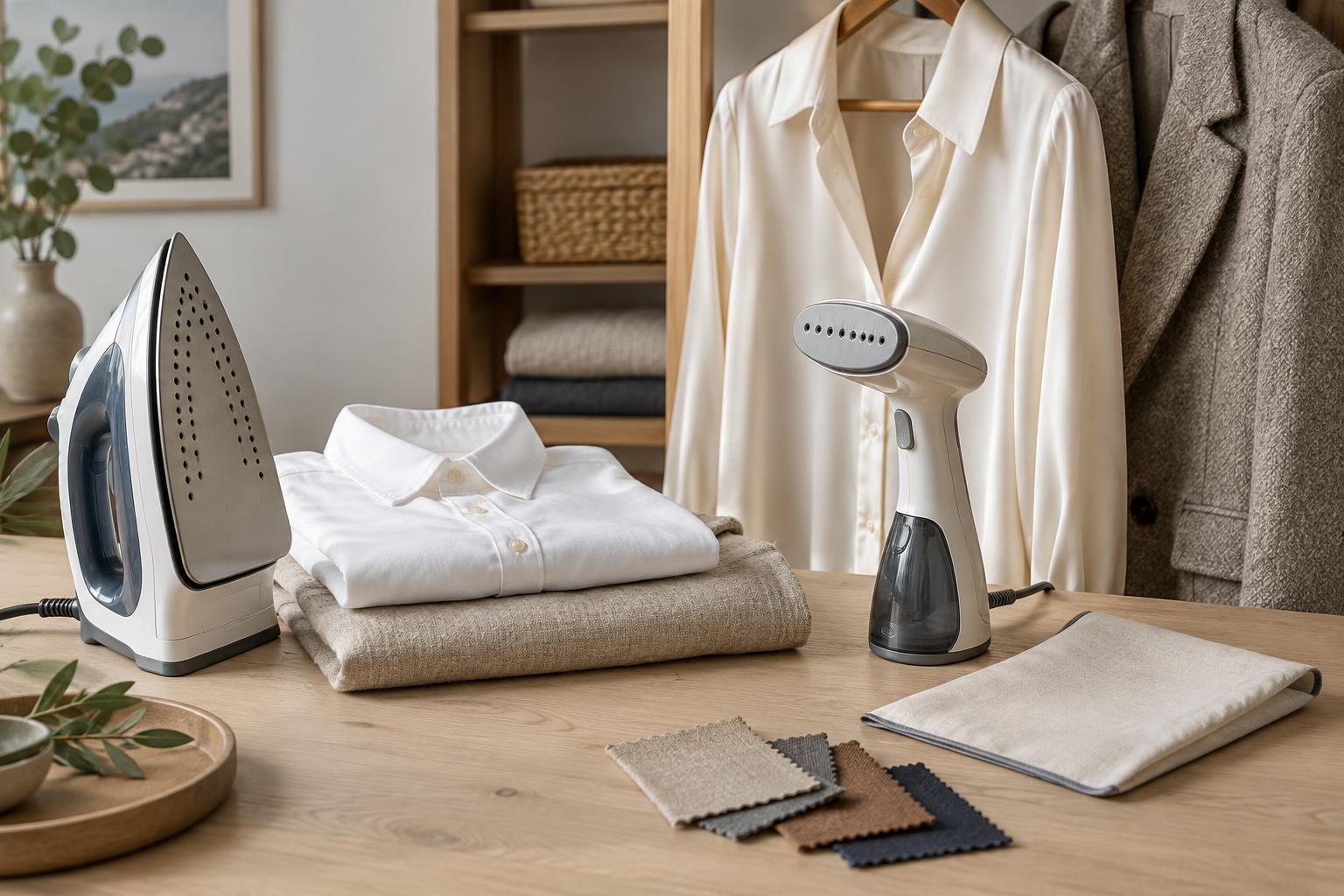
Steaming and ironing are not interchangeable. A handheld or standing steamer directs warm moisture at a hanging garment, helping relaxed wrinkles fall out without pressing the fabric flat. It is useful for refreshing a draped blouse, a scarf or a jacket between wears. An iron combines heat, moisture and pressure on a flat surface. That pressure is what makes it better for a crisp collar, a trouser crease or the clean edge of a linen shirt.
Before using either tool, read the garment’s care label. It may rule out ironing, specify a maximum temperature or call for professional cleaning. If a fabric is unfamiliar, test an inconspicuous area first. Begin with less heat and moisture than you think you need: you can make a second pass, but a scorch mark, flattened pile or water spot may be difficult to undo.
Cotton and linen: press for crispness, steam for ease
Cotton usually responds well to ironing when its care label permits it. For a polished shirt, work while the fabric is slightly damp, or use the iron’s steam setting. Start with the collar and cuffs, then move to the body, smoothing each section on the board before applying pressure. Printed details, embroidery and dark finishes may benefit from ironing on the reverse side or through a clean pressing cloth.
Linen wrinkles readily, so the choice depends on the look you want. Ironing while slightly damp gives a neat finish to a tablecloth, wide-leg trousers or a structured shirt. Steaming a hanging linen piece softens prominent folds while leaving some of its natural texture intact. A steamer may not remove deep creases at seams or hems; those areas often need the controlled pressure of an iron. Always check the label, particularly when either fabric is blended with more heat-sensitive fibers.
Silk and wool: protect the surface
Silk can show water marks or lose its finish with careless handling. If the label allows steaming, keep the steamer head from pressing against the fabric, move steadily and let the garment dry before wearing or storing it. Test first, especially on a patterned silk scarf. If ironing is permitted, use the recommended low setting, turn the piece inside out and place a clean pressing cloth between the iron and the fabric. Avoid lingering over one spot.
Wool often responds to gentle steam because moisture can help ease wrinkles without flattening its texture. Hang a wool skirt or jacket with room around it, steam carefully and let it cool and dry in shape. For a sharper crease, use an iron only if the label allows it, with a pressing cloth and light, deliberate pressure. Do not drag a hot iron across the surface: that can leave unwanted shine. Delicate knits also need support while drying so their weight does not pull them out of shape.
Synthetics, blends and textured fabrics: use restraint
Polyester and other synthetics can be sensitive to excessive heat. A low, label-approved iron setting may smooth a stubborn crease, but test first and use a pressing cloth if the surface looks prone to shine. Gentle steaming can work well for a flowing synthetic blouse; keep the steamer moving and allow the fabric to cool before judging the result. For a blend, follow the care label rather than choosing a temperature based on just one of its fibers.
Texture changes the decision. Direct ironing can crush velvet, corduroy or raised embroidery, while steam held away from the surface may help release wrinkles. Avoid pressing directly on sequins, beads, glued trims or delicate coatings. Leather and suede are best kept away from home irons and steamers unless their care instructions explicitly say otherwise. If a garment’s construction makes it hard to reach the fabric without touching a trim, leaving a minor wrinkle is safer than risking damage.
A simple routine for better results
Prepare the garment before adding heat. Empty pockets, fasten closures where helpful and check for stains: heat can make some marks harder to remove. Use clean water as directed by your appliance’s manufacturer, and make sure the iron plate or steamer head is clean. When steaming, keep your hands clear of the steam path; when ironing, work on a stable board rather than improvising on a delicate surface.
Choose the least aggressive method that achieves the finish you need. Steam a soft scarf to preserve its drape; iron a cotton cuff when you want a defined edge. Let freshly treated clothes dry and cool before folding or putting them on. That short pause helps the shape settle and keeps a carefully smoothed outfit from wrinkling again immediately.