Start with the scarf and the outfit
A long, lightweight scarf is useful because it adds color, pattern, and movement without much bulk. The easiest way to style one is to decide what you want it to do: frame your face, pull your hair back, or add a small accent to a bag. Choose one role at a time, then keep the rest of the outfit fairly quiet if the scarf has a bold print. A striped shirt, simple knit, or plain dress gives even a busy pattern room to stand out.
Before tying, let the scarf hang freely and notice its length and texture. A very slippery silk scarf may need a firmer knot than a textured cotton or silk blend. If one side has the print you want to show, fold the scarf lengthwise with that side facing out. Work gently rather than pulling hard at the ends; a loose, deliberate shape often looks better than a tightly twisted one.
1. Make a relaxed loop at the neck
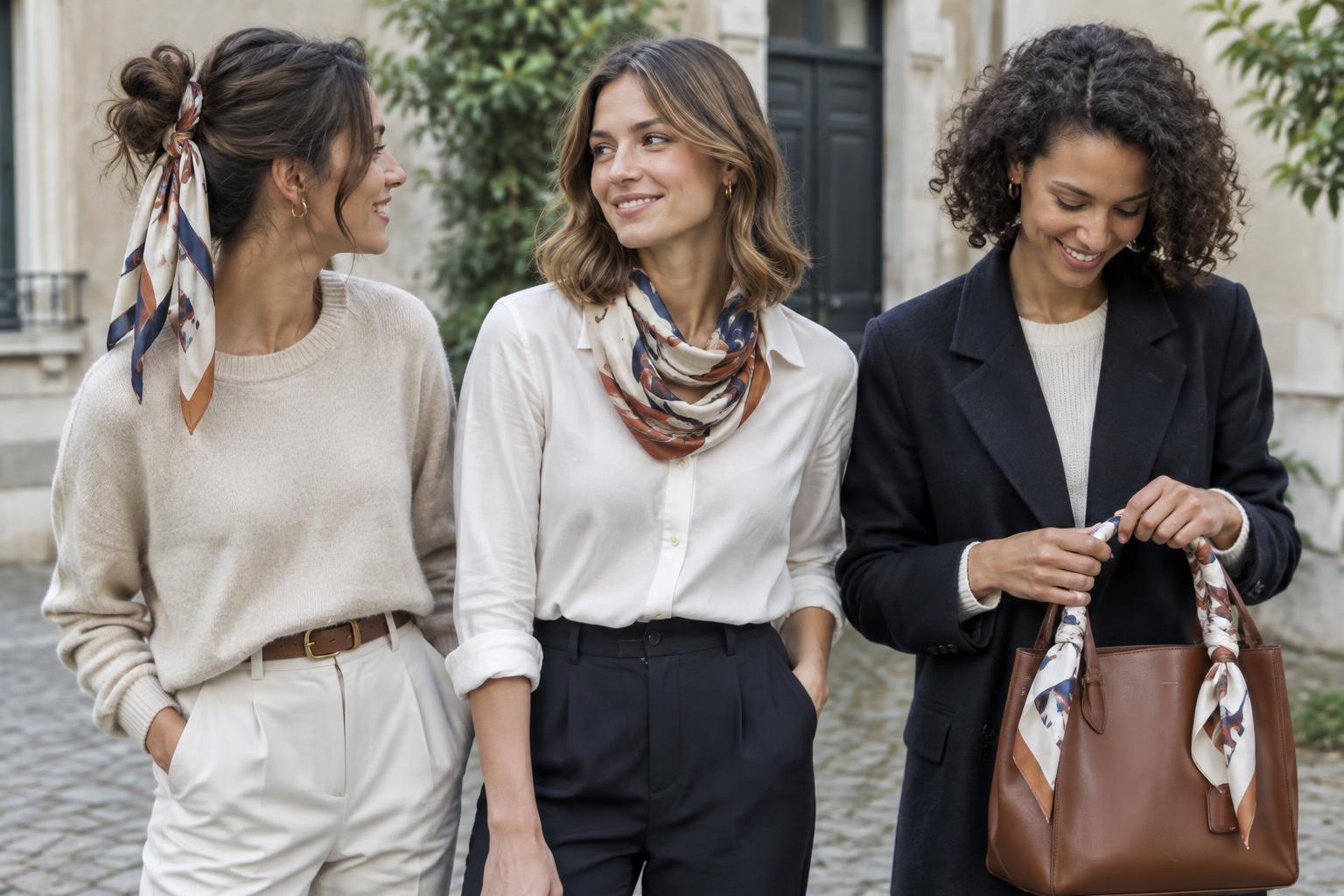
For an easy everyday option, drape the scarf around your neck with one end longer than the other. Bring the longer end once around your neck, then let both ends fall in front. Loosen the loop until it sits comfortably below your throat, and adjust the ends so they look intentional rather than perfectly matched. A soft loop suits an open collar, a crew-neck knit, or a plain T-shirt under a jacket.
If the scarf is especially long, make one loose knot near the lower end of each tail or tuck the ends beneath a jacket. This keeps them from swinging while leaving the neck area airy. For a more contained look, bring the ends together and tie a small, loose knot at the side. Avoid tightening the wrap for the sake of neatness: you should be able to move and breathe comfortably, and the fabric should not pull against a delicate neckline.
2. Tie it into your hair
A scarf can bring color close to your face without adding another layer of clothing. Gather your hair into a low ponytail with a regular hair tie first, then fold the scarf into a narrow band. Place its midpoint over the hair tie and knot the ends once or twice underneath the ponytail. Let the tails fall alongside your hair, or make a small bow if the scarf is long enough. Using a hair tie for the hold means the scarf can be decorative rather than responsible for keeping everything in place.
If you prefer your hair down, fold the scarf into a band and wear it as a headband. Set the middle just behind your hairline and tie the ends at the nape of your neck. Keep the knot small so it feels comfortable when you lean back. Slippery fabrics can shift, so start with a snug but gentle fit and check it after a few minutes. On a windy day, a ponytail tie may be the more practical choice.
3. Add it to a bag handle
When you want a hint of pattern but do not want fabric around your neck or in your hair, use the scarf on a bag. Fold it lengthwise into a narrow strip, leaving enough width to show the print. Tie one end in a simple knot at the base of a short handle, wrap the scarf along the handle with light, even overlaps, and secure the other end at the opposite base. Alternatively, tie a small bow at one end of the handle and let the tails hang. The bow takes less time and works well when the scarf is too short to cover the whole handle.
Check that the knots do not interfere with your grip or the bag’s closure. Smooth hardware, seams, and frequent rubbing can wear delicate fabric, so this is best treated as an occasional styling option for a scarf you can inspect and adjust. When you take it off, undo the knots gently instead of pulling them through. Whether you choose the neck loop, hair tie, or bag accent, the aim is the same: let the scarf add a considered detail while the outfit remains easy to wear.