Start with the garment, not the fiber
Silk is a fiber, not a single type of garment. A simple, unlined silk scarf may respond differently to water than a tailored silk jacket, a pleated skirt or a dress with delicate trim. Before deciding how to clean a piece, read its care label and consider everything that went into making it: dyes, lining, stitching, interfacing and decorative details.
If the label permits hand-washing, home care may be a reasonable option. If it says not to wash or specifies dry cleaning only, follow that direction rather than relying on a general rule about silk. Even when a label allows more than one method, professional cleaning may be the more comfortable choice for a garment that would be difficult to replace or reshape.
When home washing makes sense
Home washing is best considered for a straightforward, unstructured piece whose label allows it. A lightly worn silk blouse or scarf may need only gentle cleaning, while a stain or heavy soiling calls for more caution. Washing the whole item to remove one small mark can sometimes leave a water ring or disturb the finish.
Color is another consideration. Strong dyes and contrasting prints can bleed when wet. If the label allows washing but you are uncertain about colorfastness, dab a hidden area with a clean, damp white cloth and check for transfer. This small test cannot guarantee how the entire item will behave, but visible color transfer is a good reason to stop. Be especially careful with vintage pieces or items whose care history is unknown.
A gentle method for washable silk
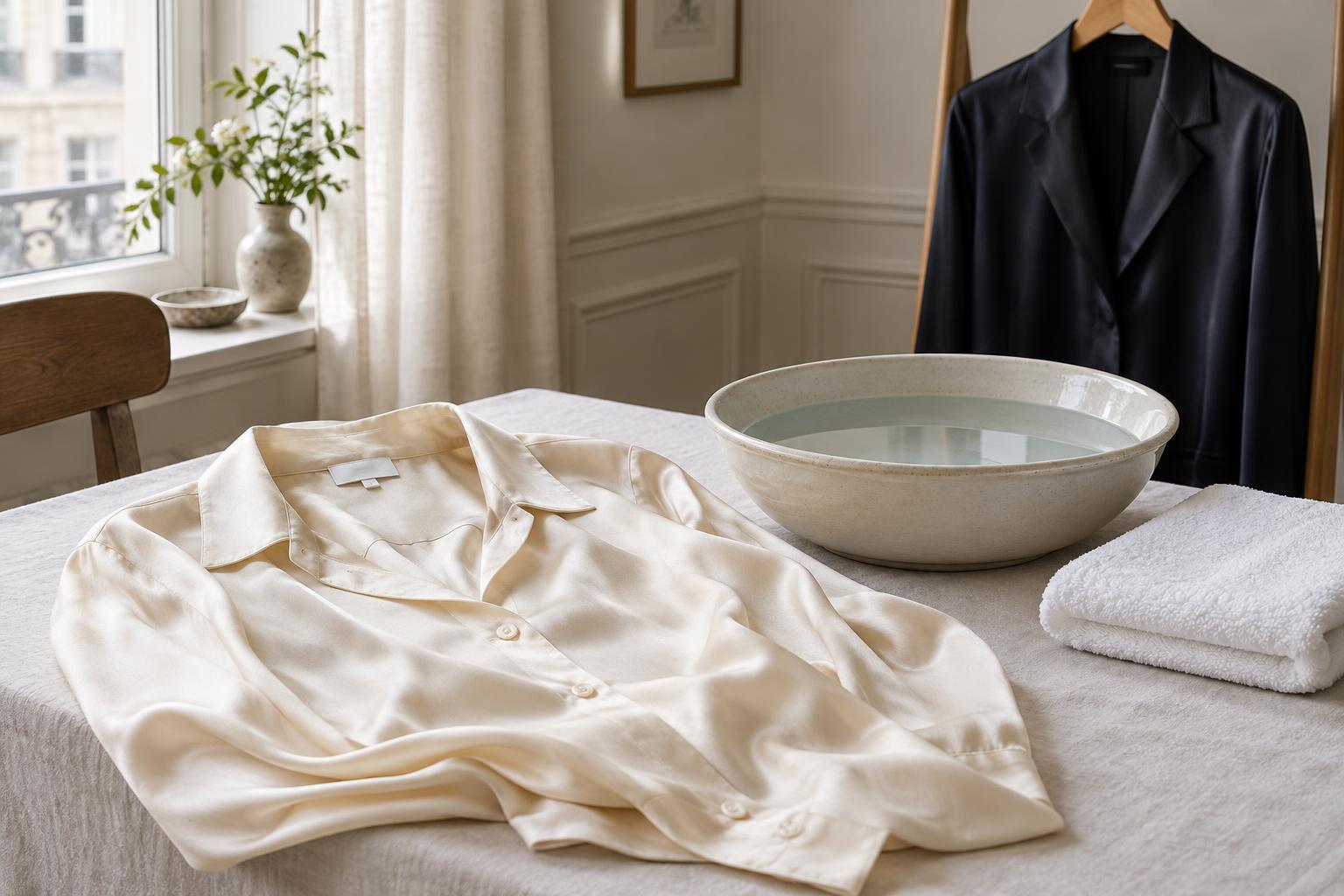
For silk that can be hand-washed, use cool water and a small amount of mild detergent suitable for silk. Wash one piece at a time so it has room to move and cannot pick up dye from another garment. Swish it gently rather than scrubbing, and avoid a long soak. Rinse in cool water without twisting or wringing the fabric.
To remove excess water, support the item as you lift it, then roll it in a clean towel and press lightly. Reshape it and lay it flat to dry, away from direct sunlight and heat. Hanging a heavy, wet silk garment may pull it out of shape. If pressing is permitted by the label, use a low setting appropriate for silk and work carefully on the reverse side. Test a hidden area first, particularly if the fabric has a sheen or texture you want to preserve.
Bleach, harsh stain removers and vigorous rubbing can damage the fabric or alter its color. If a mark does not release with gentle care, stop rather than repeating a treatment that may make it harder to address.
When dry cleaning is the better choice
Dry cleaning is worth considering for lined, tailored or structured garments. Water can affect the outer silk and the materials beneath it differently, leaving puckering, shrinkage or a changed shape. Pleats, embroidery, beads and glued details add further uncertainty. A cleaner can assess the whole garment rather than treating the silk in isolation.
It may also be preferable for silk with a crisp finish, unstable-looking color or a stain that needs targeted attention. Point out the stain, its likely cause if you know it, and any loose trims when you take the item in. Professional cleaning is not a guarantee against damage, so ask about concerns before proceeding, especially with an older or particularly delicate piece.
Choose the least risky care that will do the job
Not every wear calls for a full clean. If a silk piece is free of stains, airing it according to its care instructions may be enough before putting it away. Store it only when it is fully dry, and avoid leaving a scarf tightly knotted for long periods if you want to minimize creases.
The decision is less about whether silk can ever touch water and more about whether this particular item can be washed without compromising its color, finish or shape. Follow the label, favor gentle handling when washing is allowed, and choose professional help when the construction or consequences of a mistake make home care a poor trade-off.