Start with the occasion, not a guessed dress code
An interview is a meeting where you want your clothes to support the conversation, not compete with it. If the workplace dress code is unclear, you do not need to dress as though you already work there. A useful middle ground is a neat, considered outfit that feels appropriate for a professional meeting and still feels like you.
Use what you know about the interview itself. Is it in an office, a workshop, a café or on a video call? Will you walk between buildings, tour a site or meet several people? These details can guide your choices more reliably than assumptions about an employer’s everyday wardrobe. If you have a contact arranging the meeting, it is also reasonable to ask whether there is a recommended dress code or any practical clothing requirement.
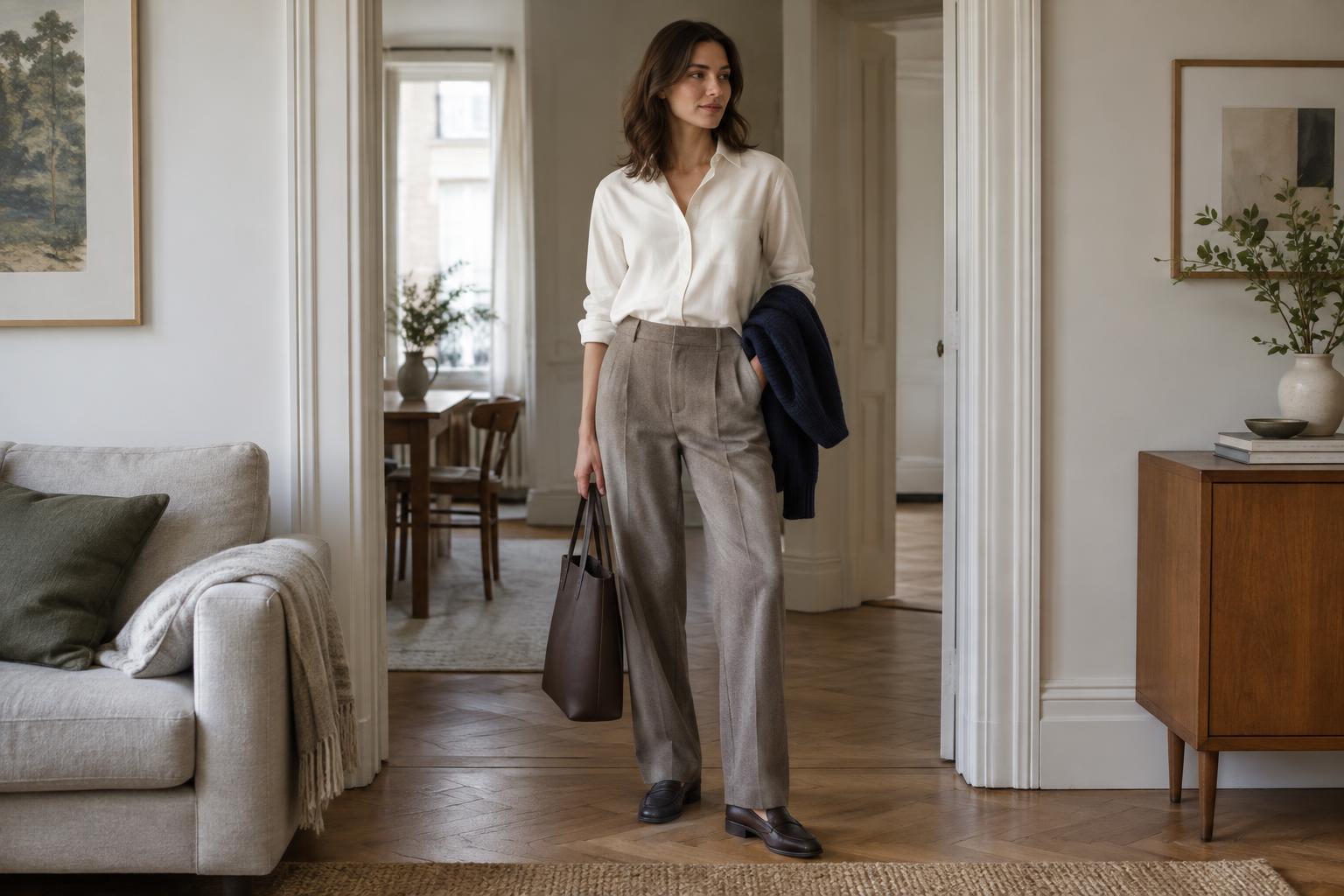
When you still have no clear answer, choose pieces that sit between formal and casual. Tailored trousers with a simple shirt, a midi skirt with a fine knit, or an uncomplicated dress with a jacket can each be adjusted without looking like a costume.
Build a simple, flexible base
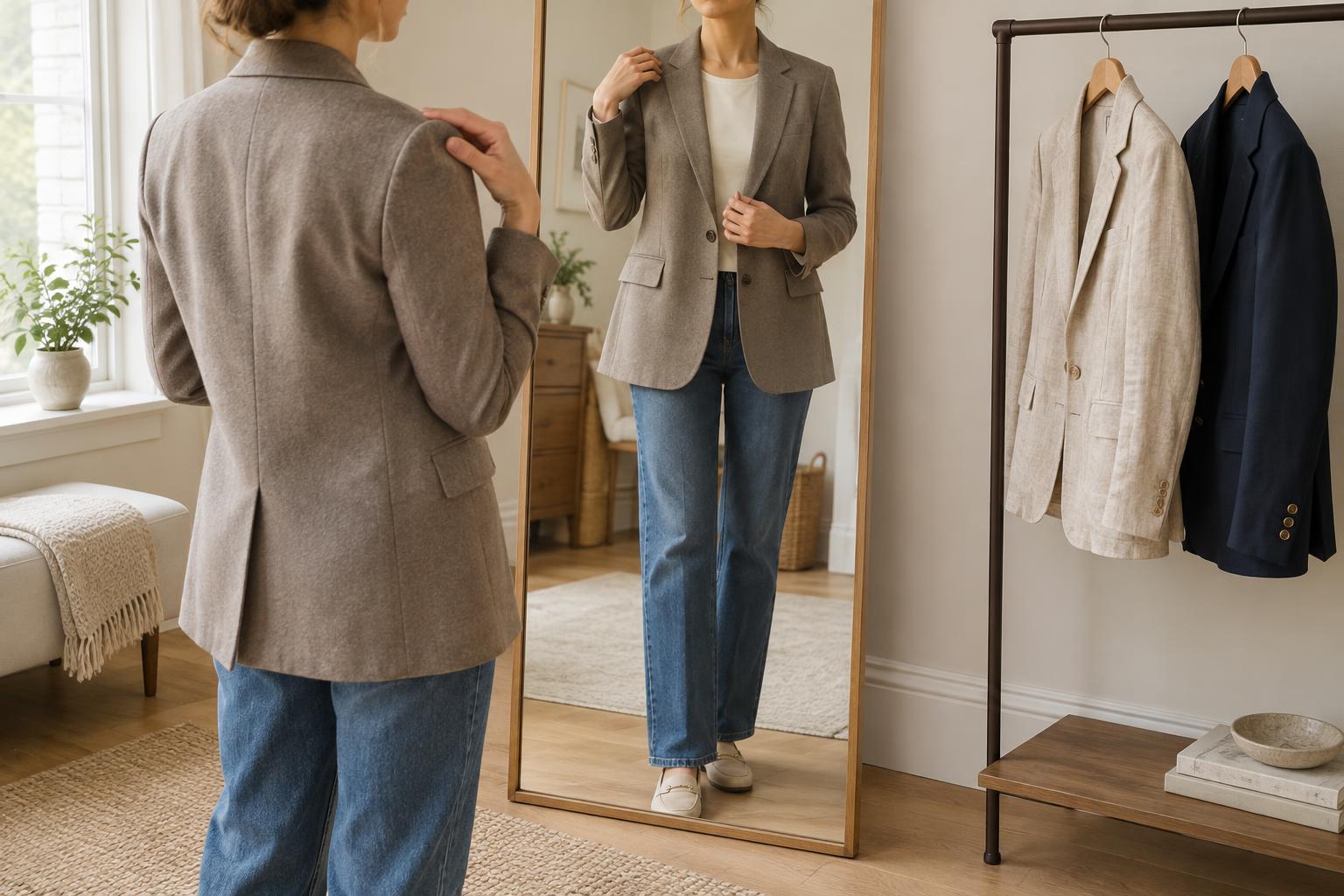
Start with clothes that fit well enough to let you sit, stand and move without frequent adjustment. A blazer can add structure, but it need not be part of a matching suit. Worn over a plain blouse, crisp shirt or refined knit, it gives you the option of taking off a layer if the setting feels relaxed. A cardigan with a clean shape can serve a similar purpose if a blazer feels too formal.
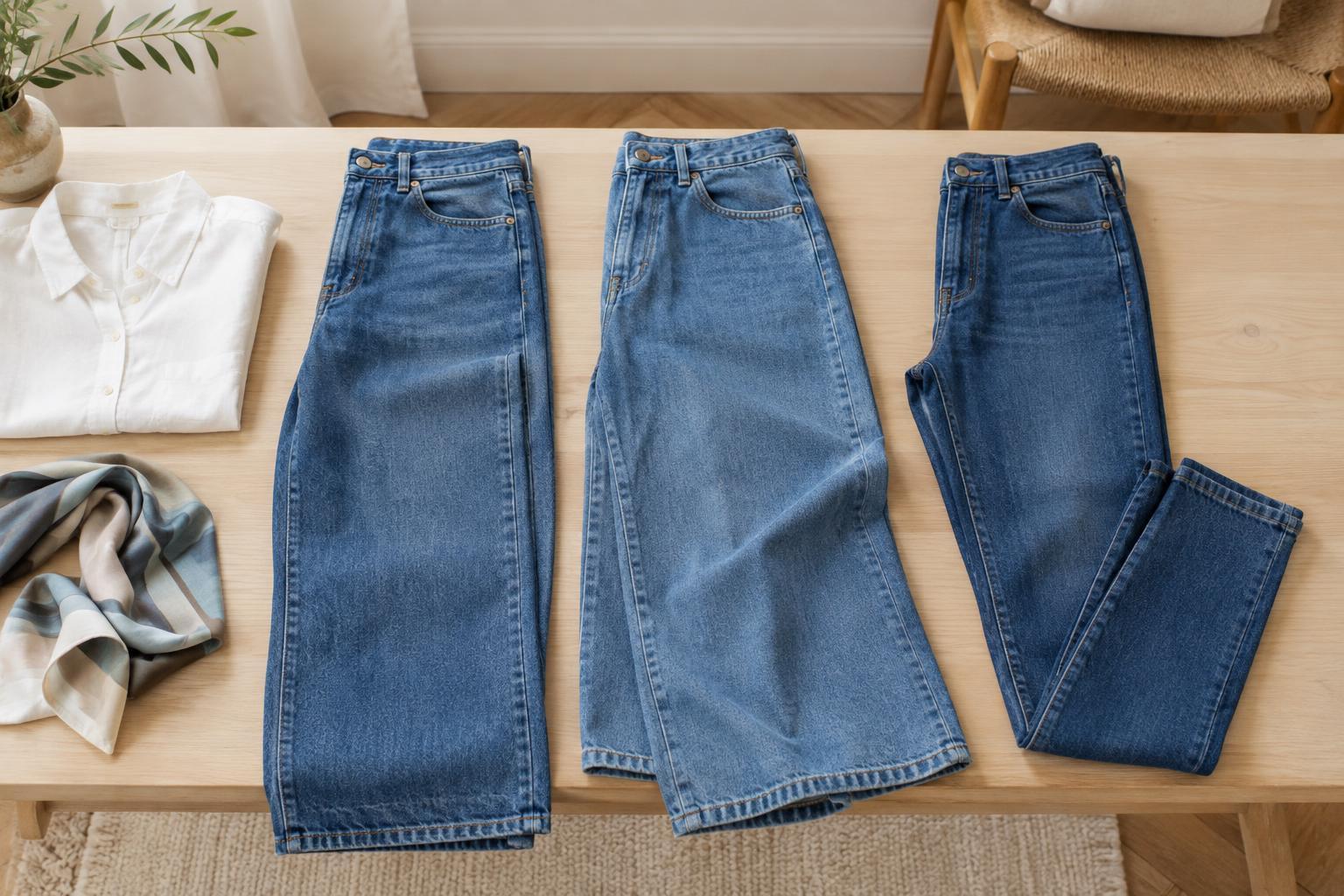
For the lower half, consider trousers with a comfortable waistband, a skirt you can sit in easily, or a dress that does not require constant checking. Dark denim might work in some workplaces, but if you cannot judge the expectations, trousers or a skirt are the less ambiguous choice. Keep colors coordinated rather than trying to match everything exactly: navy, charcoal, cream, brown or muted tones can make separate pieces feel intentional.
A French-inspired approach can be as simple as using a restrained palette and one detail you enjoy. It does not require a particular brand, a perfect capsule wardrobe or an imitation of someone else’s style. The aim is an outfit that feels composed while leaving you free to focus on your answers.
Choose shoes and accessories for the whole visit
Shoes should suit the route as well as the room. Clean loafers, flats, ankle boots or low heels can all look polished if they work with the rest of the outfit and let you walk comfortably. Before choosing a new or rarely worn pair, consider whether you may be standing for a tour or crossing a large building. Comfort is easier to plan for than to recover halfway through an interview.
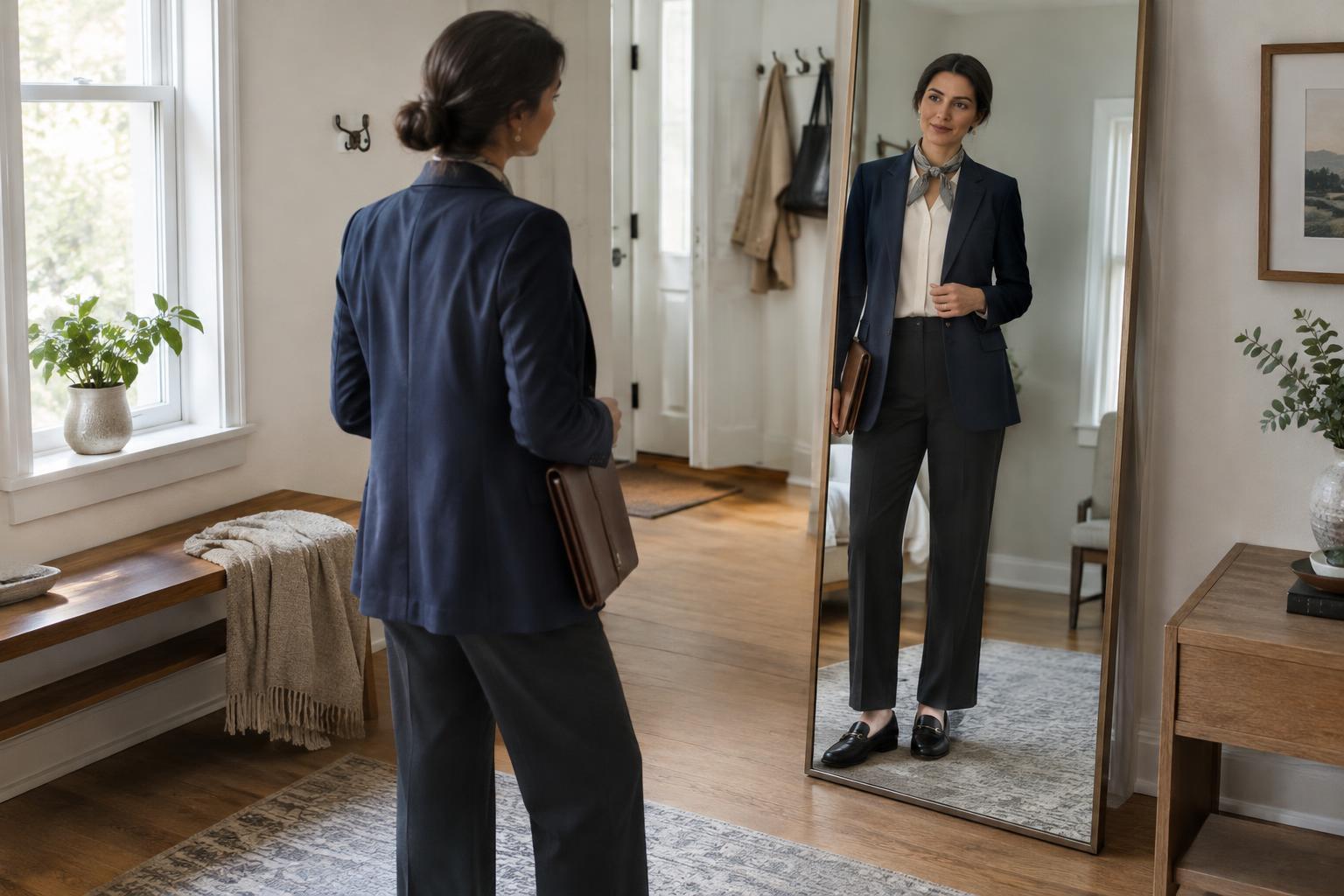
Keep accessories manageable. A small silk scarf can bring color near the face, tied loosely at the neck or on a bag handle; a simple watch or modest jewelry can do the same kind of finishing work. None of these is necessary. Avoid anything you know will distract you by slipping, making noise or needing repeated adjustment.
If you carry a bag, make sure it holds what you need without being difficult to open. A slim folder, notebook or device can fit into a practical tote or structured bag. The goal is to arrive able to put your things down, greet people and settle in without rearranging your outfit.
Adjust for video calls and practical workplaces
For a video interview, dress for the full call rather than only the portion visible on screen. You may need to stand up or adjust your setup, and wearing a complete outfit can help the occasion feel deliberate. Check how your top appears on camera: very fine stripes or busy patterns may be distracting, while a solid color often keeps attention on your face. Make sure the neckline and any scarf sit comfortably when you are seated.
Some interviews involve a studio, laboratory, kitchen, outdoor site or other environment where ordinary office shoes or loose accessories may be impractical. If the invitation mentions a tour or task, follow any clothing guidance you receive. When it does not, ask about footwear or safety requirements in advance rather than trying to infer them from a general dress code.
Make the final check about ease
The evening before, try on the complete outfit, including shoes and outerwear. Sit down, stand up and reach for your bag. Check for marks, loose buttons or creases that bother you, and give yourself time for simple garment care. If a piece needs complicated fixing, choose another one rather than relying on a last-minute solution.
The strongest choice is not necessarily the most formal outfit you own. It is one that respects the meeting, fits the practical setting and lets you move naturally. When the dress code remains uncertain, a tidy base, an adaptable layer and a small personal detail are enough to make a thoughtful impression without pretending you know more about the workplace than you do.