Start with the invitation, not the outfit
Before choosing what to wear, check where and when the party takes place. A lunch in the office, drinks at a nearby restaurant and a seated evening dinner can call for different levels of formality. If the invitation names a dress code, use it as your starting point. If it does not, the venue and your workplace’s usual approach to dressing are useful clues.
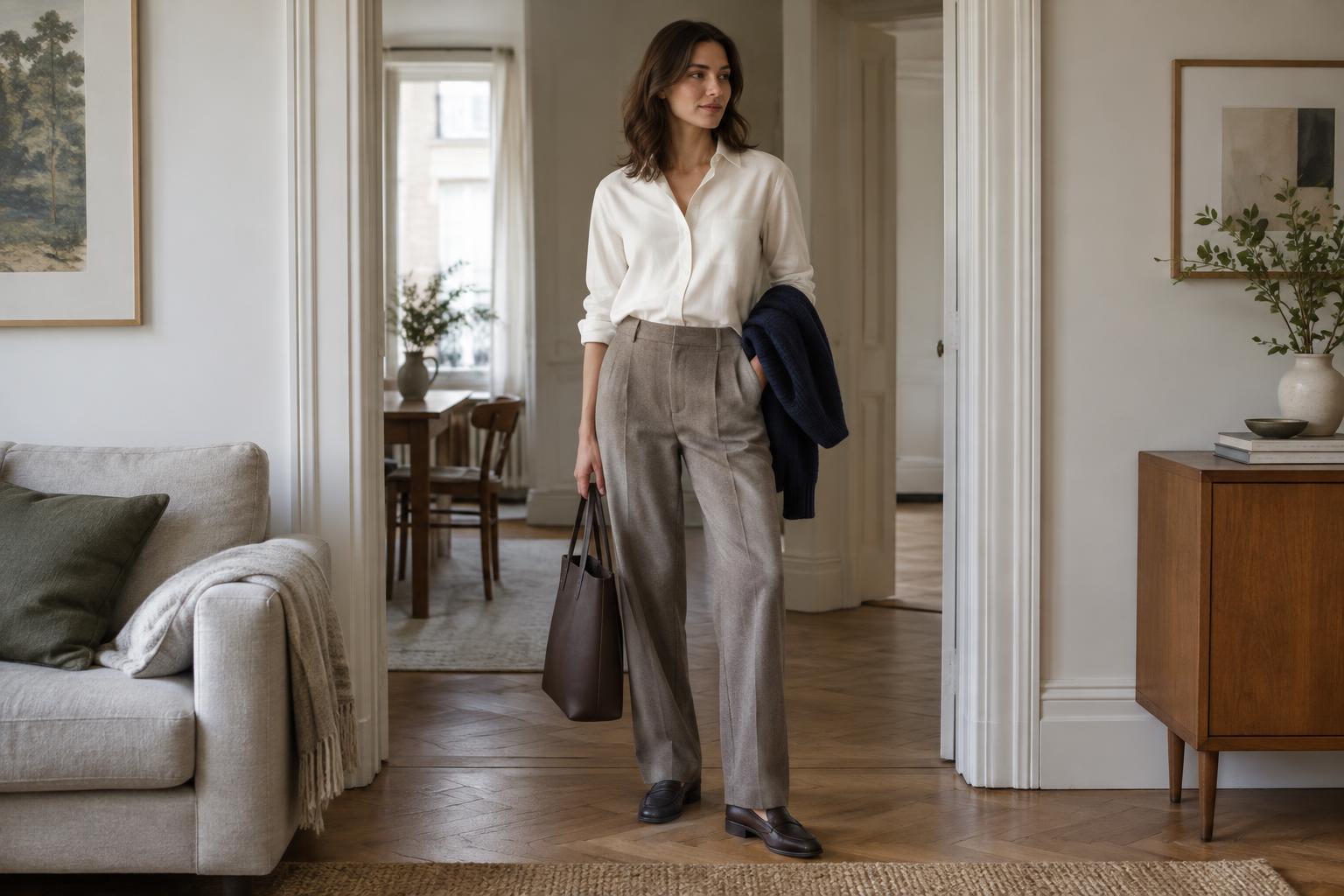
A simple way to find the middle ground is to dress one step above an ordinary workday, rather than several steps above it. That might mean exchanging a cotton shirt for a fluid blouse, adding a tailored jacket to a familiar dress or choosing polished shoes with trousers you already wear. You will look as though you made an effort without feeling like you arrived for a different event.
Build around one familiar piece
An outfit often feels most natural when at least one major piece is already part of your wardrobe. Well-fitting trousers, a simple dress or a dark skirt can serve as the base. From there, change the texture or finish: a satin-like blouse with tailored trousers, a fine knit with a skirt, or a soft jacket over a plain dress adds interest without requiring an entirely new look.
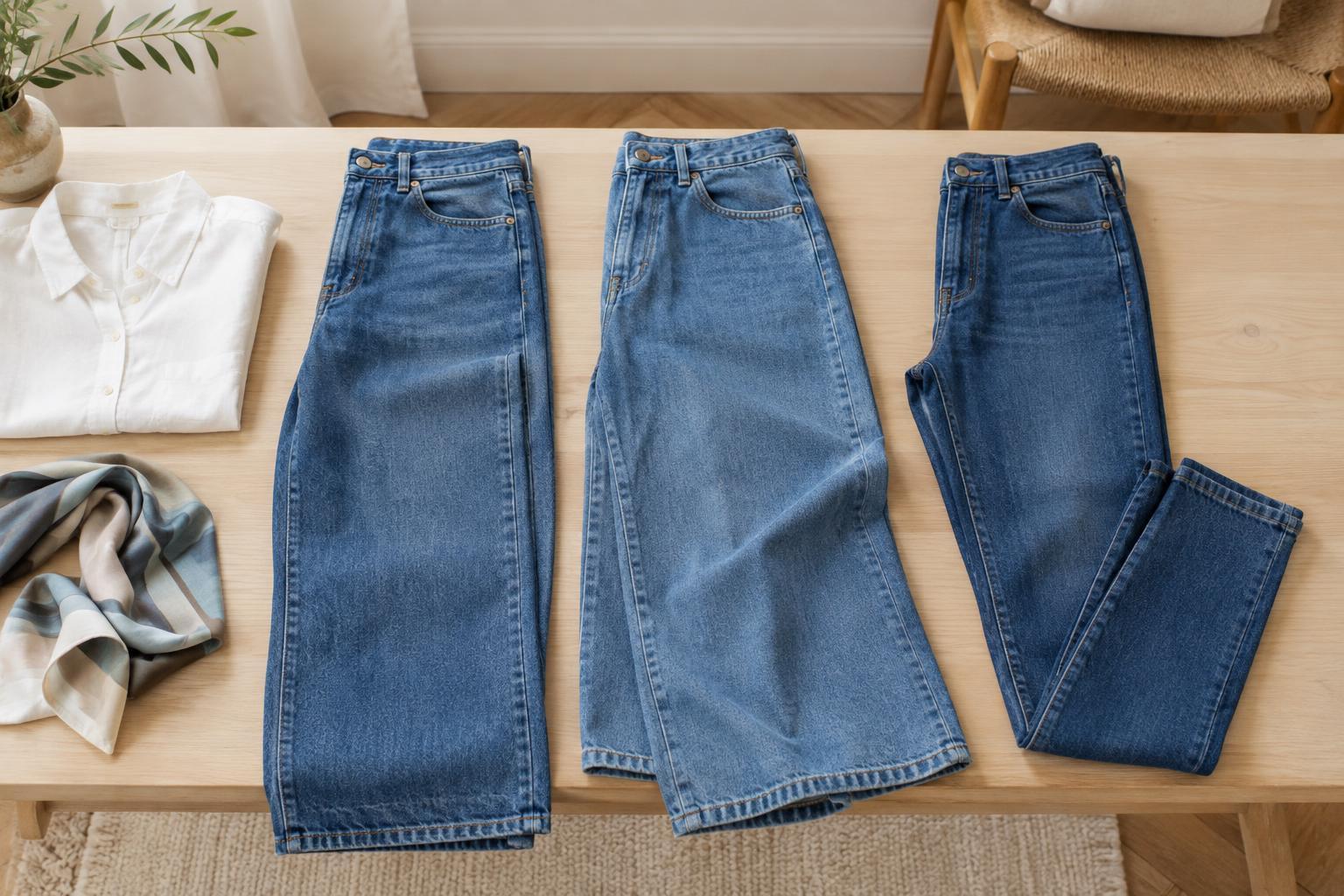
If your office tends to be casual, dark jeans may work for an informal gathering, provided they are in good condition and the setting allows them. Pair them with a neat top and shoes that feel a little more considered than your everyday choice. For a more formal workplace, tailored separates are an adaptable option. They can feel festive with a small accessory change while remaining appropriate if colleagues arrive straight from work.
Choose one festive note
You do not have to combine shine, bold colour and statement jewellery to signal that it is a party. Choosing one festive element makes the outfit easier to balance. Try a silk scarf at the neck of a plain blouse, metallic earrings with a dark dress, a velvet jacket over simple separates or shoes in a richer colour than you usually wear.
A scarf is especially useful when you want an accessory you can adjust during the evening. Tie a small one loosely at the neck, knot it to a bag handle or remove it if the room feels more understated than expected. The same principle applies to jewellery: one noticeable piece can carry an otherwise quiet outfit. Let it be the detail that draws the eye, and keep the rest comfortable and uncomplicated.
Dress for the whole event
Picture the practical parts of the gathering, not just the moment you walk in. You may be standing for long stretches, moving between rooms, sitting down to eat or travelling home in cold weather. Shoes you can comfortably wear for the full event are usually a better choice than a pair you hope you can tolerate. A low heel, polished flat or clean dress shoe can all look intentional when they suit the rest of the outfit.
Think about temperature, too. A fine knit or lightweight jacket gives you flexibility if the venue is warmer or cooler than expected. If you will wear a coat, check how the outfit looks after you take it off. Likewise, make sure you can sit, reach and move easily in your clothes. An outfit that needs constant adjustment can make a relaxed party feel less relaxed.
Make a final check before you leave
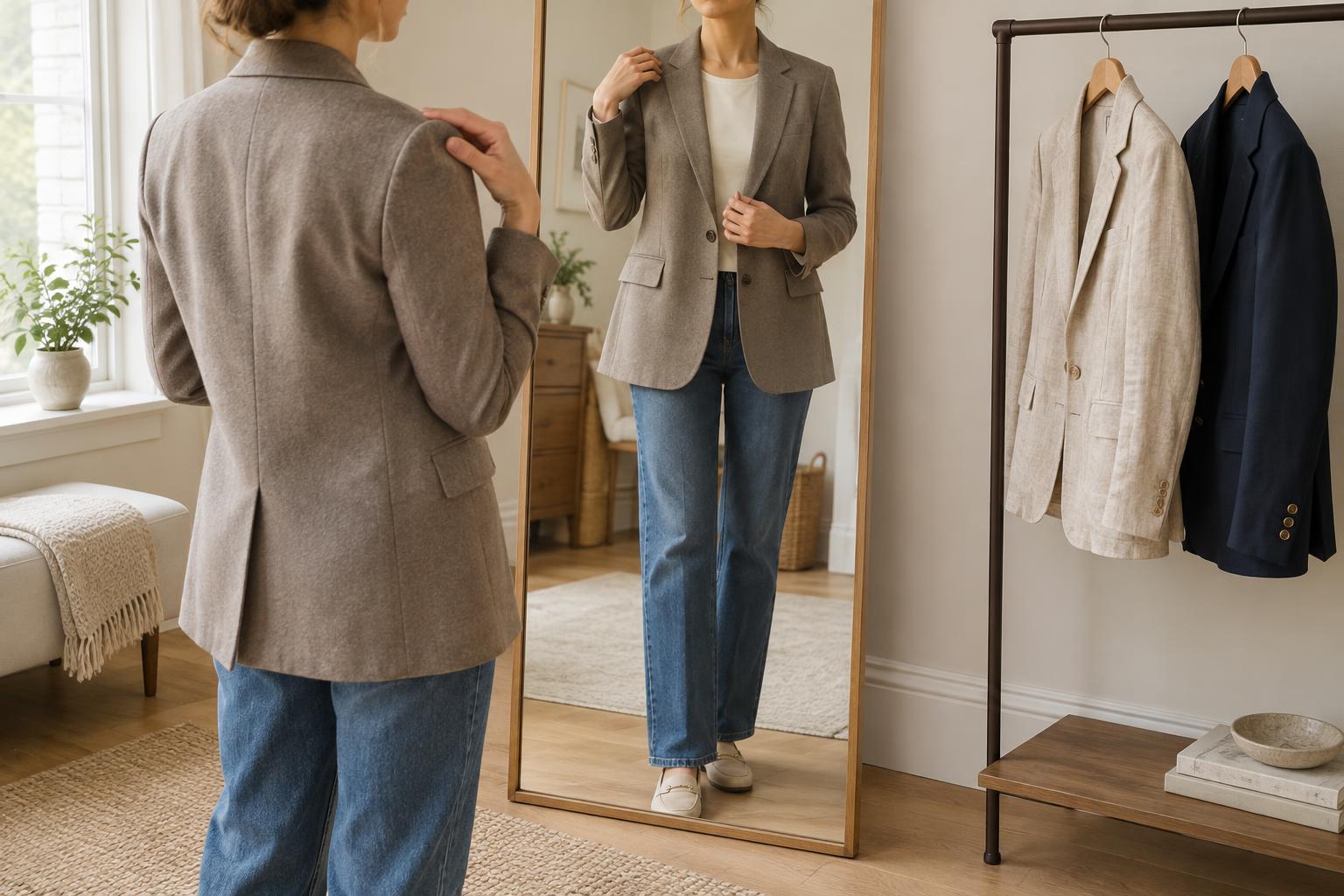
Try the complete outfit on in advance, including shoes, outerwear and accessories. This is the moment to notice a hem that catches on a shoe, a blouse that needs a different layer underneath or a scarf that competes with a patterned top. If something feels too formal, remove one dressy element. If it feels too much like a normal workday, add a single detail with colour, texture or shine.
The aim is not to dress according to an imaginary perfect party outfit. It is to feel at ease with colleagues while marking the occasion. When the clothes fit well, suit the setting and let you enjoy the evening without thinking about them too much, you have probably found the right balance.