Start with the days you actually dress for
The best outerwear purchase is not necessarily the warmest or most polished piece. It is the one that works for your usual weather, journeys and clothes. Before choosing between a wool coat and a puffer jacket, think about how often you walk outdoors, whether you wait for public transport, and what you normally wear underneath. A coat that looks beautiful over a light outfit may be less useful if most winter mornings call for a thick sweater and a brisk walk.
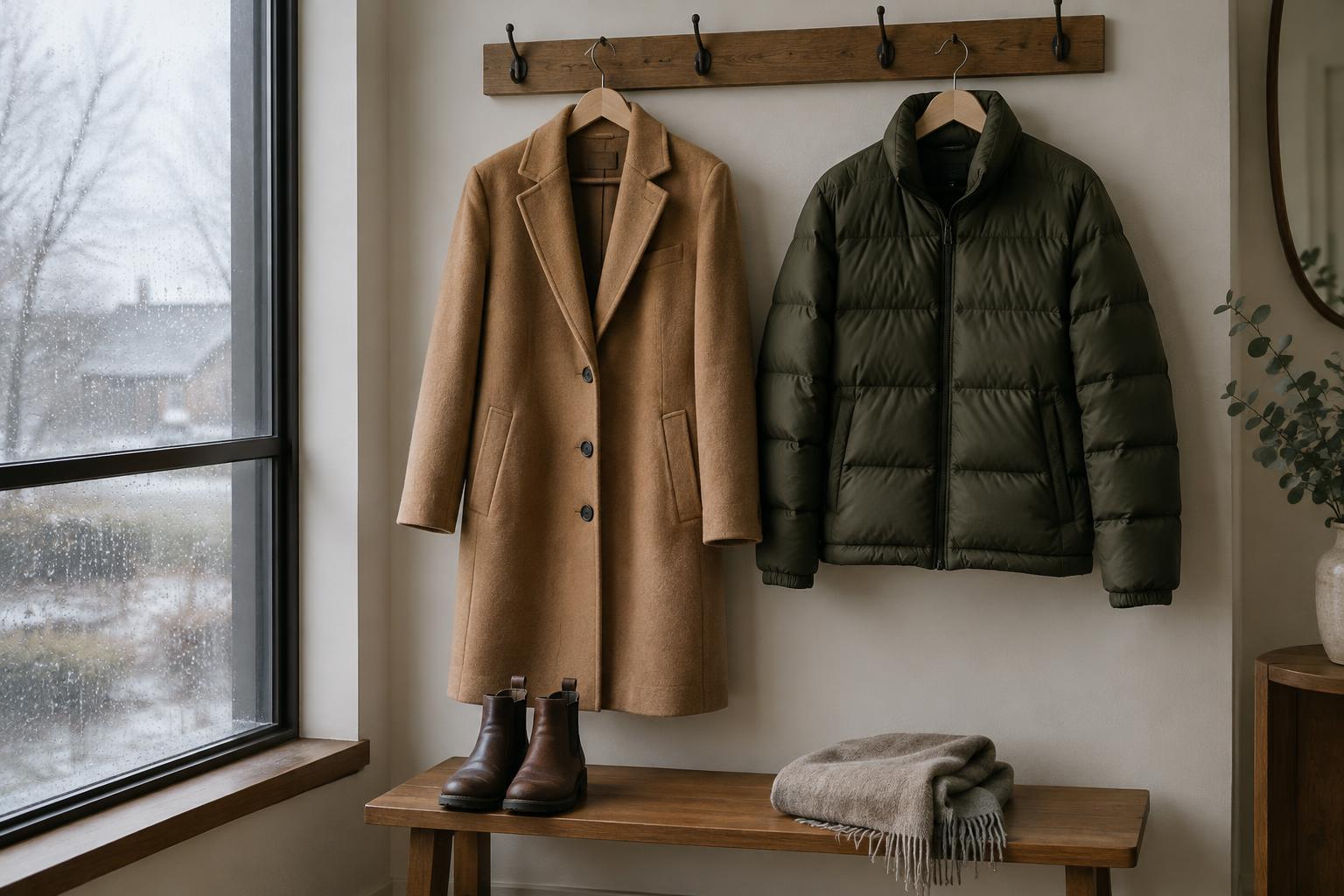
A wool coat is often the easier choice when you want a clean line over workwear, tailoring or a simple jeans-and-knit combination. A puffer is often more practical when warmth, ease of movement and casual wear take priority. Neither category guarantees a particular level of protection: fabric, construction, fit and length matter as much as the label on the hanger.
Compare warmth and weather protection
Wool coats provide warmth through their fabric and the layers you wear beneath them. A substantial, lined coat with enough room for knitwear can feel very different from a lightweight, unlined version. Length also changes the experience: a coat that covers the hips or thighs offers more coverage than a short jacket. If you tend to overheat indoors, a wool coat worn over removable layers may be a flexible option.
A puffer uses insulated panels to trap warmth, often without requiring heavy layers underneath. Its comfort depends on the amount and type of insulation, the outer fabric, the cuffs and how well the jacket closes around the neck. A roomy puffer that lets cold air in may disappoint, while one that is too tight can make layering awkward. Try it over the clothes you expect to wear in winter, not just a thin top.
For frequent rain or wet snow, check the specific garment rather than assuming either style will keep you dry. Some puffers have water-resistant outer fabrics, but water resistance is not the same as waterproofing. Wool can handle a little moisture, yet a soaked wool coat may become heavy and take time to dry. If wet weather is routine, consider whether you also need a suitable rain layer.
Think about the outfits you repeat
A wool coat can bring structure to relaxed clothes. A straight or gently shaped style works over wide-leg trousers, denim, dresses and knitwear without demanding a formal outfit. For a restrained, French-inspired look, try a simple coat with comfortable shoes and one small accent, such as a scarf. The point is balance, not a rule about what anyone in Paris wears.
A puffer lends itself to casual outfits, but it need not look purely sporty. A jacket with minimal detailing and a color that already appears in your wardrobe can sit comfortably alongside tailored trousers or a long skirt. Consider its proportions: a cropped puffer can balance fuller bottoms, while a longer one offers coverage over shorter layers. Pay attention to where the hem falls rather than choosing a shape solely because it looks appealing on a hanger.
If you regularly dress for occasions where you want a more refined outer layer, a wool coat may do more work across your wardrobe. If your week revolves around errands, outdoor walks and casual commuting, a puffer may get worn more. Choosing the piece that suits your most common days does not prevent you from dressing it up or down.
Check fit and care before you commit
When trying on a wool coat, button it over your bulkiest likely layer. You should be able to move your arms comfortably without the shoulders pulling or the front straining. Check whether the collar sits well with your usual scarves and whether the pockets are easy to reach. Look at the care label, too: some coats require professional cleaning, which may affect how readily you wear them.
With a puffer, test the zip, hood and cuffs, then sit down and raise your arms. Check that the insulation stays evenly distributed and that the jacket does not ride up uncomfortably. Care instructions vary by fabric and filling. Follow the garment label when washing and drying it; improper care can affect the insulation and shape. For either piece, brushing off surface dirt and storing it clean and dry can help keep it ready for the next cold season.
Make the choice that fills a real gap
If you can buy only one, choose a wool coat when your climate is generally moderate, your days call for polished outfits, and you are comfortable layering for colder spells. Choose a puffer when you spend more time outside in the cold, value lightweight insulation, or need a jacket that fits an active, casual routine. In a particularly wet climate, evaluate weather protection separately whichever style you prefer.
If both would be useful, avoid buying two pieces that serve the same narrow purpose. A versatile wool coat and a genuinely warm puffer can cover different kinds of days. Start with the gap you notice most often: the mornings when you wish your current outerwear were warmer, easier to move in, or more at home with what you have chosen to wear.